
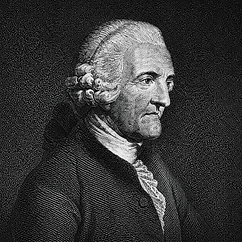
Edmond Hoyle: Card-Game Authority and 1979 Poker Hall of Fame Charter Member

POKER HALL OF FAME
Inducted 1979
Edmond Hoyle was an 18th-century English writer and authority on card games whose name became synonymous with accepted rules of play. Best known for his 1742 work A Short Treatise on the Game of Whist, Hoyle wrote about rules, strategy and probability long before poker developed into the game recognized today.
Hoyle was not a poker player in the modern sense, and he died decades before poker emerged in documented American gambling culture. His connection to poker instead comes from his enormous influence on gaming literature and the later use of the Hoyle name on rulebooks covering poker and other games.
That influence received formal recognition in 1979, when Hoyle became one of the seven charter members of the Poker Hall of Fame. The World Series of Poker lists Edmond Hoyle among the Hall of Fame's 1979 inductees, placing him alongside Johnny Moss, Nick "The Greek" Dandolos, James Butler "Wild Bill" Hickok, Felton "Corky" McCorquodale, Red Winn and Sid Wyman.
⠀
Who Was Edmond Hoyle?
Edmond Hoyle was born in 1672 and became one of the most influential early English writers on card and table games. Reliable information about much of his early life is limited, but his reputation became closely associated with teaching, documenting and analyzing games.
Hoyle wrote about whist, backgammon, piquet, quadrille, brag, chess and probability. His work helped establish the idea that games could be studied systematically through clearly stated rules, strategic principles and mathematical reasoning.
The Library of Congress National Library Service overview of games and gaming notes Hoyle's role in codifying game rules and producing instructional manuals. His writings eventually made his surname a shorthand for authoritative rules.
Hoyle died in London on August 29, 1769.
⠀
A Short Treatise on the Game of Whist
Hoyle's most famous publication was A Short Treatise on the Game of Whist.
WorldCat records an edition of A Short Treatise on the Game of Whist published in London in 1742, establishing Hoyle's work during a period when whist was becoming an important English card game.
The treatise went beyond simply describing how to play. Hoyle addressed strategic decisions and mathematical considerations, helping readers think about the game in a more analytical way.
His work proved remarkably durable. The UCLA William Andrews Clark Memorial Library's Edmond Hoyle bibliography documents hundreds of editions and related publications associated with Hoyle and his gaming legacy.
⠀
Hoyle's Use of Probability and Strategy
One reason Hoyle remains relevant to the history of poker thinking is his treatment of games as subjects that could be analyzed rather than played entirely through instinct or tradition.
Card players constantly make decisions with incomplete information. Hoyle's writings explored rules, probabilities and strategic choices within the games of his era.
That does not mean Hoyle developed modern poker concepts such as pot odds, ranges, expected value or equity. Those ideas belong to later poker theory. His significance is broader: he helped popularize a systematic approach to understanding games through rules, observation and calculation.
Those principles remain central to serious poker study.
⠀
What Games Did Edmond Hoyle Write About?
Hoyle's writings covered several games and related subjects during the 18th century, including:
Whist
Backgammon
Piquet
Quadrille
Brag
Chess
Probability and mathematical analysis of games
Brag is particularly interesting in the broader history of poker because it belongs to the family of betting and vying card games that preceded modern poker. That connection, however, should not be confused with evidence that Hoyle invented poker or wrote its original rules.
⠀
Was Edmond Hoyle a Poker Player?
No reliable evidence establishes Edmond Hoyle as a poker player.
Hoyle died in 1769, before poker became documented as a recognizable game in the United States. His own writings concentrated on games played during his lifetime rather than the later forms of poker that developed during the 19th century.
The confusion is understandable because later publishers continued using the Hoyle name on gaming manuals long after his death. Some of those books eventually included poker.
For example, the Library of Congress catalogs The American Hoyle by William Brisbane Dick, an 1868 gaming manual that included poker material. Such publications helped connect the Hoyle name with poker even though Edmond Hoyle himself did not author the poker sections that appeared generations after his death.
⠀
Edmond Hoyle's 1979 Poker Hall of Fame Induction
Hoyle's importance to gaming history was formally recognized when the Poker Hall of Fame was established in 1979.
He was one of seven members of the inaugural class, making him a Poker Hall of Fame charter member. The original group consisted of Hoyle, Johnny Moss, Nick "The Greek" Dandolos, James Butler "Wild Bill" Hickok, Felton "Corky" McCorquodale, Red Winn and Sid Wyman.
The WSOP's Poker Hall of Fame records list Hoyle as a 1979 inductee. WSOP descriptions of the Hall of Fame have recognized both influential players and important contributors to poker, providing the historical context for Hoyle's inclusion despite his death more than two centuries ago.
His induction is particularly notable because his importance did not come from tournament victories or high-stakes poker results. It reflected the enduring influence of his work on the culture of card games and the establishment of recognized rules.
⠀
Why Is Hoyle Connected to Poker?
Hoyle's connection to poker is primarily historical and cultural.
His books established his surname as a mark of authority on game rules. Later publishers capitalized on that reputation by producing generations of books carrying the Hoyle name, even as those books expanded to games that developed after his lifetime.
Poker eventually became part of that publishing tradition.
As a result, generations of card players encountered poker rules in books associated with the Hoyle name. The distinction is important: Edmond Hoyle did not personally write the rules of modern poker, but his reputation helped create the publishing tradition through which standardized rules for many games, including poker, were distributed.
His selection as a 1979 Poker Hall of Fame charter member provides the clearest formal connection between Hoyle's historical influence and poker.
⠀
What Does "According to Hoyle" Mean?
Few gaming writers have had their names enter everyday language as completely as Hoyle.
The expression "according to Hoyle" came to mean following established or accepted rules. Merriam-Webster traces the expression to Edmond Hoyle, whose rulebooks became authoritative references for card players.
The phrase eventually expanded beyond card games. Someone doing something "according to Hoyle" is generally understood to be doing it according to accepted rules, conventions or proper procedure.
That linguistic legacy demonstrates how strongly Hoyle's reputation became associated with rules and fair play.
⠀
Hoyle's Influence on Modern Poker Thinking
Hoyle did not teach modern poker strategy, but several principles represented by his work remain recognizable to poker players.
Poker depends on clearly understood rules. It rewards players who study probabilities, evaluate incomplete information and make disciplined decisions. Modern poker strategy has developed far beyond the games Hoyle analyzed, but the underlying idea that card games can be studied systematically connects his work to contemporary poker education.
His contribution is therefore best understood as foundational rather than technical. Hoyle helped establish a tradition of studying games through written rules, strategy and mathematics.
⠀
The Long Life of the Hoyle Name
Edmond Hoyle's influence continued long after his death.
Publishers repeatedly used his surname for collections of game rules, creating generations of "Hoyle" books covering an expanding range of card and table games. Some were based on or descended from his original work, while later publications contained material written or compiled by other authors.
This distinction matters when researching Hoyle's relationship with poker. A poker rule appearing in a later book bearing the Hoyle name does not mean Edmond Hoyle personally wrote it.
What persisted was the authority attached to his name.
⠀
Edmond Hoyle's Place in Poker History
Edmond Hoyle occupies an unusual position in poker history.
He has no WSOP bracelets, tournament earnings, WPT titles or recorded poker results to evaluate. Applying modern player statistics to him would misrepresent who he was and why he matters.
His poker legacy instead rests on influence.
Hoyle became one of history's best-known authorities on card-game rules and strategy. His name survived for centuries in gaming literature, became part of the English language and eventually became associated with poker rulebooks produced after his death.
The Poker Hall of Fame made that influence part of poker's official historical record in 1979 by selecting Hoyle as one of its seven charter members.
For a man who died long before the World Series of Poker, tournament circuits or modern poker strategy existed, that recognition demonstrates the extraordinary reach of his legacy.
⠀
Frequently Asked Questions
Was Edmond Hoyle inducted into the Poker Hall of Fame?
Yes. Edmond Hoyle was inducted in 1979 as one of the seven charter members of the Poker Hall of Fame.
⠀
Was Edmond Hoyle a professional poker player?
No. Hoyle was an English writer, teacher and authority on games rather than a professional poker player. He died in 1769, before modern poker developed.
⠀
Did Edmond Hoyle write the rules of poker?
No. Hoyle wrote about games including whist, backgammon, piquet, quadrille and brag, but modern poker developed after his lifetime. Later gaming books carrying the Hoyle name included poker rules, which helped create the association.
⠀
What was Edmond Hoyle famous for?
Hoyle was best known for writing authoritative works on card and table games, particularly his 1742 A Short Treatise on the Game of Whist. His name became so closely associated with accepted rules that the expression "according to Hoyle" entered common usage.
⠀
What does "according to Hoyle" mean?
"According to Hoyle" means following accepted rules, conventions or proper procedure. The expression developed from Edmond Hoyle's reputation as an authority on the rules of games.
⠀
Why is Edmond Hoyle important to poker history?
Hoyle helped establish a tradition of formally documenting game rules, strategy and probability. Later rulebooks carrying his name included poker, and his broader influence on gaming was recognized with his induction as a charter member of the Poker Hall of Fame in 1979.
⠀
Was his name Edmond Hoyle or Edmund Hoyle?
Edmond Hoyle is the spelling used by authoritative historical catalogs and the Poker Hall of Fame. "Edmund" appears in some later references, but Edmond is the appropriate spelling for his profile.