
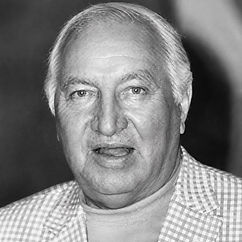
Joe Bernstein: 1973 WSOP Bracelet Winner and Poker Hall of Famer

POKER HALL OF FAME
Inducted 1983
Joe Bernstein was an American poker player and road gambler whose career reached from poker's pre-World Series gambling era into the earliest years of the WSOP. His most documented tournament achievement came in 1973, when he won a $3,000 Limit Ace-to-Five Draw Lowball event for $21,000 and his only World Series of Poker bracelet.
Bernstein's reputation extended well beyond that single recorded tournament result. The World Series of Poker has described him as a road gambler remembered for being exceptionally well dressed at the table, and the Poker Hall of Fame recognized his standing in the game by inducting him in 1983.
Bernstein died before his Hall of Fame induction, making his place in poker history largely a legacy story rather than one built around the extensive tournament databases available for modern professionals. His career belongs to an era when high-stakes cash games and private gambling contests often mattered more to a player's reputation than publicly recorded tournament earnings.
⠀
Who Was Joe Bernstein?
Joe Bernstein, also identified in historical references as Joseph Bernstein, was an American professional gambler and poker player associated with the generation of road gamblers who competed for high stakes long before televised poker and large tournament circuits became common.
Historical records place his life from 1899 to 1975. Much of his poker career therefore predates the World Series of Poker, which began in 1970, and reliable public records of his complete gambling history are limited.
The World Series of Poker identifies Bernstein as a United States player with one bracelet, one WSOP cash and $21,000 in WSOP earnings. Those statistics reflect his documented World Series tournament record rather than the full scope of a gambling career that developed decades before standardized tournament databases.
Bernstein was part of the same broad gambling culture that produced many of poker's early recognized figures. His career overlapped with players and gamblers who built their reputations through private games, road action and high-stakes competition rather than through the tournament schedules that define professional poker today.
⠀
Joe Bernstein's Road-Gambling Career
Bernstein's historical importance is rooted in the road-gambling world.
Before legalized cardrooms, televised tournaments and online poker created more visible professional pathways, skilled gamblers often traveled in search of profitable games. Reputation was built through repeated competition against other established gamblers, sometimes in private games where reliable public records were never created.
The WSOP's historical description of Bernstein calls him a road gambler and highlights his distinctive appearance, describing him as a particularly dapper and well-dressed presence at the table.
Historical accounts also connect Bernstein with prominent gamblers from the first half of the 20th century, including Alvin "Titanic" Thompson. Those associations place Bernstein within a period of American gambling history that preceded the formal tournament-poker industry.
That background helps explain why Bernstein's official tournament statistics appear modest compared with his Hall of Fame status. Tournament earnings databases capture only a small and late portion of his career.
⠀
Joe Bernstein's 1973 WSOP Bracelet
Bernstein earned his defining documented tournament victory during the 1973 World Series of Poker at Binion's Horseshoe in Las Vegas.
He won the $3,000 Limit Ace-to-Five Draw Lowball event, defeating a field of seven entries and collecting the $21,000 first prize. The victory gave Bernstein his first and only WSOP bracelet.
1973 World Series of Poker
$3,000 Limit Ace-to-Five Draw Lowball
Seven entries
First place
$21,000 prize
One WSOP bracelet
The event was played during an era when the World Series was still a small gathering compared with the international festival it later became. The 1973 WSOP consisted of compact fields populated by many established professional gamblers.
Bernstein's victory also came in a form of poker that receives far less tournament exposure today.
⠀
What Is Ace-to-Five Draw Lowball?
Ace-to-Five Draw Lowball is a draw-poker format in which players compete to make the lowest qualifying hand rather than the highest conventional poker hand.
In ace-to-five lowball, aces are treated as low cards, and straights and flushes generally do not count against a low hand. The ideal five-card holding is therefore A-2-3-4-5, often called a wheel.
Bernstein's bracelet was won in a limit version of the game, meaning betting occurred in predetermined increments rather than under the no-limit structure familiar to many modern hold'em players.
Ace-to-Five Draw appeared periodically on early WSOP schedules and produced champions including Johnny Moss. PokerNews records Bernstein among the winners of the format, confirming his 1973 victory, seven-player field and $21,000 prize.
⠀
How Many WSOP Bracelets Did Joe Bernstein Win?
Joe Bernstein won one World Series of Poker bracelet.
The current WSOP player database credits him with:
One WSOP bracelet
Zero WSOP Circuit rings
One WSOP final table
One WSOP cash
$21,000 in WSOP earnings
All of those figures stem from his 1973 Ace-to-Five Draw Lowball victory.
His single bracelet should be viewed in the context of the period. Bernstein was already late in a long gambling career when the World Series was created, so the WSOP represents only the final years of his time in poker rather than the beginning of it.
⠀
Joe Bernstein's Tournament Earnings
The most reliable documented tournament figure for the historical Joe Bernstein is the $21,000 he earned by winning his 1973 WSOP bracelet event.
The current WSOP database lists $21,000 in total WSOP earnings.
Some online tournament databases display a larger lifetime total under the name Joe Bernstein because they also contain tournament results from 2017 and 2018. Those results occurred more than four decades after the historical Bernstein's death and therefore should not be attributed to the 1983 Poker Hall of Fame inductee.
For that reason, Angry Aces Poker does not treat those later cashes as part of Bernstein's career total.
This distinction illustrates an important limitation when researching players from poker's early history: identical names and incomplete historical records can create database entries that require additional verification rather than being accepted at face value.
⠀
Joe Bernstein and the Poker Hall of Fame
Joe Bernstein was inducted into the Poker Hall of Fame in 1983.
The official Poker Hall of Fame continues to list Bernstein as the 1983 inductee and identifies him as a United States player.
His induction came during the Hall's earliest period. Benny Binion established the Poker Hall of Fame in 1979 to recognize players and other figures whose achievements and influence helped shape the game.
Bernstein followed early inductees including Johnny Moss, Nick "The Greek" Dandolos, Bill Boyd and Tom Abdo. Later generations of Hall of Famers included Doyle Brunson, who became one of the defining tournament and cash-game figures of the WSOP era.
The WSOP's historical material remembers Bernstein primarily as a respected road gambler. That description is important because Hall of Fame recognition is not based only on bracelet totals or recorded tournament winnings. Long-term success against strong competition and respect among peers have always been central to the institution's concept of poker greatness.
⠀
Why Joe Bernstein Matters to Poker History
Bernstein represents a bridge between two very different periods of professional poker.
Most of his career developed before the creation of the World Series of Poker, when a successful professional gambler could build a major reputation without leaving behind a large public record of tournament finishes.
Then, late in his career, Bernstein competed in the new tournament environment and captured a WSOP bracelet.
His legacy therefore combines three elements:
A reputation established in the old road-gambling culture
A documented WSOP championship in 1973
Posthumous induction into the Poker Hall of Fame in 1983
Modern players are often evaluated through databases containing hundreds of tournament results. Bernstein came from a period when those records did not exist. His Hall of Fame membership preserves evidence of how highly his poker ability and gambling career were regarded even though only a small portion of his results can now be documented statistically.
⠀
Joe Bernstein's Legacy
Joe Bernstein died in 1975, two years after earning his WSOP bracelet and eight years before his Poker Hall of Fame induction.
His death means there is no modern tournament activity or current playing status to evaluate. His place in poker is entirely historical.
The surviving record is compact but significant. Bernstein was a respected road gambler from poker's pre-WSOP generation, became a World Series bracelet winner during the tournament's formative years and was later recognized by the Poker Hall of Fame.
For readers studying the origins of professional poker, Bernstein's career is also a reminder that tournament databases tell only part of the story. Many of the players who established poker's early professional culture made their reputations in games that produced little permanent statistical documentation.
Bernstein's one bracelet and Hall of Fame membership remain the clearest enduring markers of that career.
⠀
Frequently Asked Questions
Who was Joe Bernstein?
Joe Bernstein was an American poker player and road gambler from the generation that competed professionally before and during the earliest years of the World Series of Poker. He won a WSOP bracelet in 1973 and was inducted into the Poker Hall of Fame in 1983.
⠀
How many WSOP bracelets did Joe Bernstein win?
Joe Bernstein won one WSOP bracelet. He captured the $3,000 Limit Ace-to-Five Draw Lowball event at the 1973 World Series of Poker.
⠀
How much did Joe Bernstein win at the 1973 WSOP?
Bernstein earned $21,000 for winning the 1973 $3,000 Limit Ace-to-Five Draw Lowball event. The tournament had seven entries.
⠀
How much did Joe Bernstein win in live poker tournaments?
The WSOP officially records $21,000 in tournament earnings for the historical Joe Bernstein, all from his 1973 bracelet victory. Some third-party databases combine that result with much later cashes belonging to a player with the same name, so those later results should not be attributed to Bernstein.
⠀
Did Joe Bernstein have any WSOP Circuit rings?
No. The WSOP lists Joe Bernstein with one bracelet and zero WSOP Circuit rings. The WSOP Circuit did not exist during his lifetime.
⠀
Is Joe Bernstein in the Poker Hall of Fame?
Yes. Joe Bernstein was inducted into the Poker Hall of Fame in 1983. The official Hall of Fame continues to list him as that year's inductee.
⠀
What poker game did Joe Bernstein win his bracelet in?
Bernstein won his bracelet in Limit Ace-to-Five Draw Lowball, a draw-poker variant in which the objective is to make the lowest hand.
⠀
Was Joe Bernstein a road gambler?
Yes. WSOP historical material describes Bernstein as a road gambler and remembers him as an especially well-dressed player at the poker table.
⠀
When did Joe Bernstein die?
Historical records list Joe Bernstein as having died in 1975. The official Poker Hall of Fame identifies him as a deceased member.
⠀
Why is Joe Bernstein important to poker history?
Bernstein is important because his career connects poker's road-gambling era with the beginnings of the World Series of Poker. He built a respected gambling reputation before winning a WSOP bracelet in 1973 and was posthumously inducted into the Poker Hall of Fame in 1983.